Introduction
Phenylketonuria (PKU) is the most common inborn error of amino acid metabolism. Mutations in the gene encoding phenylalanine hydroxylase (PAH), the enzyme responsible for the metabolism of phenylalanine, lead to high levels of phenylalanine in the blood and tissues. If untreated or poorly managed, this causes profound neurological and developmental damage. Prior to the availability of pharmacotherapy, management of PKU relied on strict observance of a phenylalanine-restricted diet, which many people, particularly after early childhood, find impossible to follow. As a result, blood phenylalanine levels are often poorly controlled and adolescents/adults experience neuropsychological and behavioural effects of varying severity. Sapropterin, a synthetic version of the natural cofactor of PAH (tetrahydrobiopterin; BH4) augments residual PAH activity and was introduced in Europe in 2008. It offered the prospect of improved control of blood phenylalanine levels, but only for the subgroup of people with BH4-responsive PKU who have residual PAH activity.1
In 2017, the European Society of Phenylketonuria and Allied Disorders convened a panel of experts to develop consensus guidelines on the management of PKU with the aim of establishing a standard for diagnostics, treatment and care. They endorsed the concept of evidence-based management and treatment for life, with the aim of maintaining blood phenylalanine levels within the recommended range (120–600µmol/L for patients aged ≥12 years).2 Pegvaliase, an innovative enzyme substitution therapy, has been shown in large-scale clinical trials to control blood phenylalanine levels.3,4 Improvements in neuropsychological outcomes have been associated with reductions in blood phenylalanine.3 It has now been approved for the treatment of patients aged 16 and older whose blood phenylalanine level is not controlled by other treatment options.5
Phenylketonuria
Definition
Phenylalanine is an essential amino acid. Its metabolism to tyrosine, a precursor of catecholamines, is catalysed by PAH in a reaction that requires BH4 as a cofactor. PKU is an inborn error of metabolism due to mutations in the gene encoding PAH, causing a deficiency in phenylalanine metabolism. This results in elevated phenylalanine levels, causing long-term toxicity, notably in the brain.1
Historically, PKU has been classified according to the blood level of phenylalanine at diagnosis (ie prior to treatment). The normal range is 50–100μmol/L.1 Mild hyperphenylalaninaemia was defined as levels of 120–600μmol/L; mild PKU was defined as levels of 600–1200μmol/L; and a level of >1200μmol/L denoted classic PKU.1 This approach links the severity of PKU to an easily measurable marker, but the wide ranges of blood phenylalanine levels are unhelpful diagnostically. This classification may also be misleading in newborn children who, when diagnosed, may not have achieved their maximum blood phenylalanine level.1 Hyperphenylalaninaemia is now considered to be a continuous spectrum of blood phenylalanine levels and is classified as either (a) not requiring treatment or (b) requiring diet, BH4 supplementation, or both to maintain phenylalanine levels within the guideline recommended range.2
Genetics
PKU is inherited in an autosomal recessive pattern, meaning that both parents must carry a mutated allele for their offspring to be affected; their children have a 50% chance of being a carrier, a 25% chance of being unaffected, and a 25% chance of having PKU.
More than 1000 mutations of the PAH gene have been identified.6 About one half of these mutations are associated with what was traditionally defined as classical PKU, whereas about one quarter partially inhibit PAH activity and cause a milder phenotype; other mutations cause mild hyperphenylalaninaemia.7 These variations in residual PAH activity underlie differences in treatment responsiveness to sapropterin (but not diet or other treatment). Mutations in genes coding for enzymes involved in the biosynthesis or recycling of BH4, attenuating PAH activity by limiting the availability of the essential cofactor, account for 1–2% of cases of hyperphenylalaninaemia; some of which respond to treatment with sapropterin.1 Combinations of different mutations are also likely to be significant because an individual is unlikely to inherit the same mutation from both parents.
Epidemiology
PKU is the commonest inborn error of metabolism with an overall incidence of 1 in 10 000 to 15 000, but there is a large geographical variation. One review found that the incidence in China was 1 in 17 000 but 1 in 41 000 in Korea and 1 in 125 000 in Japan.8 In Europe, the reported incidence ranges from 1 in 3000 in Slovenia9 to 1 in 200 000 in Finland, whereas in the United States (Caucasians) and Australia, it has been reported as 1 in 10 000.8 Some of this variation is due to differences in reporting rates but large variation is also evident between different ethnic groups in a single country: in one study of 167 children with PKU in England, the prevalence of PKU was approximately 1 in 8800 live births among ethnic whites, 1 in 91 000 among people of Sub Saharan origin and 1 in 34 000 among those of South Asian ancestry.10
Effects on neurocognitive development and long-term outcomes
High blood phenylalanine levels generally translate into high levels of phenylalanine in the brain, with profound effects on neurological development during childhood and adolescence. These effects result in intellectual disability, microcephaly, motor deficits, eczematous rash, autism, seizures, developmental problems, aberrant behaviour and psychiatric symptoms. Even with treatment, intellectual and neuropsychiatric effects may emerge with age or if adherence to treatment is suboptimal.2 However, detection through neonatal screening and early treatment to control blood phenylalanine levels means that people with PKU can achieve developmental milestones in line with population norms.1,2
Compared with controls from the general population, adults with PKU have a higher prevalence of neuropsychiatric symptoms (inattention, hyperactivity, depression, anxiety) and deficits in executive function (attention, inhibitory control, cognitive flexibility).11 A cohort study in Germany (n=377 adults with PKU) found a significantly higher prevalence of a range of disorders compared with non-PKU controls, including major depressive disorders, reaction to severe stress and adjustment disorders, dizziness and giddiness, chronic ischemic heart disease, diabetes mellitus, infectious gastroenteritis and colitis, and asthma. The prevalence of these disorders in people with PKU was approximately 10–16%, more frequent than in the control population by a factor of 1.6–2.3.12 A survey of adults with PKU and parents/caregivers of children with PKU found that many reported problems managing their/their children’s disorder.13 They experienced difficulty maintaining focus; low mood, anxiety or depression; gastrointestinal symptoms; and relationship difficulties and social exclusion.
Management of PKU
Diagnosis
The normal circulating level of phenylalanine in newborns is up to 120μmol/L.1 PKU is identified by universal screening of neonates, ideally within 24–72 hours of birth,2 using a blood spot test to measure blood phenylalanine. European guidelines do not specify a blood level of phenylalanine that warrants referral for specialist assessment.2 Individual countries may have their own guidelines – in the UK, for example, a level of 200μmol/L is an indication for prompt referral, both to confirm the extent to which phenylalanine is raised and to differentiate between PKU and other causes of hyperphenylalaninaemia, such as BH4 deficiency.14 Genotyping is not required for a diagnosis of PKU though it may provide information on the metabolic phenotype by providing information on the degree of protein dysfunction and the expected degree of residual PAH activity.2
Management
European consensus guidelines on the diagnosis and management of PKU were published in 2017.2 They comprise 70 recommendations aimed at standardising care in Europe, though the authors acknowledge that the evidence base includes some studies with methodological deficiencies. Eleven recommendations were identified as key (Box 1). These set out standards for diagnosis; the principle of treatment for life; the threshold levels of blood phenylalanine for treatment in children, adults and pregnant women; and the standards for monitoring and tackling challenges to adherence.

The primary goal of treatment is normal neurocognitive and psychosocial functioning. This is achieved by maintaining blood phenylalanine levels within the target range, which for patients aged ≥12 years is 120–600μmol/L. The primary strategy is dietary management to restrict intake of protein (as a source of phenylalanine), with supplements to replace dietary deficiencies of the other amino acids and minerals in excluded foodstuffs.2
The optimal protein intake for individuals is determined pragmatically, balancing the need to limit phenylalanine but provide sufficient amino acids for normal growth; this depends on age, body weight and the severity of PKU. Amino acid supplementation can be provided as phenylalanine-free amino acid formula, large neutral amino acids (LNAAs) or, less commonly, casein glycomacropeptide. LNAAs have been shown to reduce blood phenylalanine levels and decrease its transport across the blood–brain barrier but they are not recommended for children <12 or pregnant women.2 The guidelines provide detailed advice on the management of PKU before, during and after pregnancy. People with PKU who were diagnosed late or were untreated, develop intellectual impairment but they may still benefit from control of blood phenylalanine levels.
Amino acid supplements are associated with gastrointestinal disturbance and possibly proteinuria and reduced glomerular filtration rate after long-term use.2 The dose should be divided into three equal portions throughout the day and patients should be offered a choice of age-appropriate formulations. The diet should also include unlimited fruit, vegetables (except potatoes) and low-protein preparations of bread, pasta, cereal, flour, egg and milk replacements. The sweetener aspartame is a source of phenylalanine and should be replaced by alternatives.2
This diet is difficult or impossible long-term for many people with PKU: a life lived with severe dietary restriction affects attitudes to food and eating and may increase the risk of eating disorders. Patients and parents/carers of children with PKU describe difficulties following dietary recommendations, with 86% of adults and 89% of caregivers of children saying significant effort was associated with dietary management. Some adults (14%) said they could not manage it independently.13 They said the diet was time consuming and complained of limited food choices and unpleasant substitutes. Adherence to diet, which declines between childhood and adolescence/adulthood,15 determines the achievement of treatment targets. A 2015 survey of 43 respondents in Europe found that fewer than only one in three were able to maintain their blood phenylalanine level below 600μmol/L.16
Adults with more severe PKU report guilt about their low adherence to diet or supplements and anxiety about blood phenylalanine levels, though quality of life (assessed using generic quality-of-life tools) in people with PKU is comparable with that of the general population overall.17 However, a PKU-specific quality-of-life tool identified the greatest impact on measures of emotional impact of PKU and its management – specifically anxiety about blood phenylalanine levels, diet and amino acid supplementation, with the greatest impact for anxiety about blood phenylalanine levels during pregnancy.17
Other than diet, treatment options for people with PKU are very limited. The differential diagnosis of PKU identifies some patients who have BH4 deficiency or who are responsive to BH4 supplementation because they have residual PAH function. Sapropterin is indicated for responsive children and adults as an adjunct to a low-protein diet. All patients, except those with double null PAH mutations, should receive a BH4 response test and treatment should be continued only when a 30% reduction in blood phenylalanine levels within 48 hours. Responsiveness should then be confirmed by a therapeutic trial; this may take several weeks to months.
Sapropterin reduces phenylalanine levels, with people with mild PKU appearing to respond better than people with classical PKU.18 It also improves phenylalanine tolerance in the short term with no serious adverse effects. Long-term (7 years) follow-up of 575 patients with PKU treated with sapropterin showed that blood phenylalanine levels were maintained near the ranges recommended by the European PKU guidelines (patients 0–<12 years, approximately 360mmol/L; older people <600mmol/L) and also an increased dietary intake of phenylalanine. Treatment was well tolerated, with 6.4% of patients reporting sapropterin-related events, most involving the neurological and gastrointestinal systems and none considered serious.19
Pegvaliase
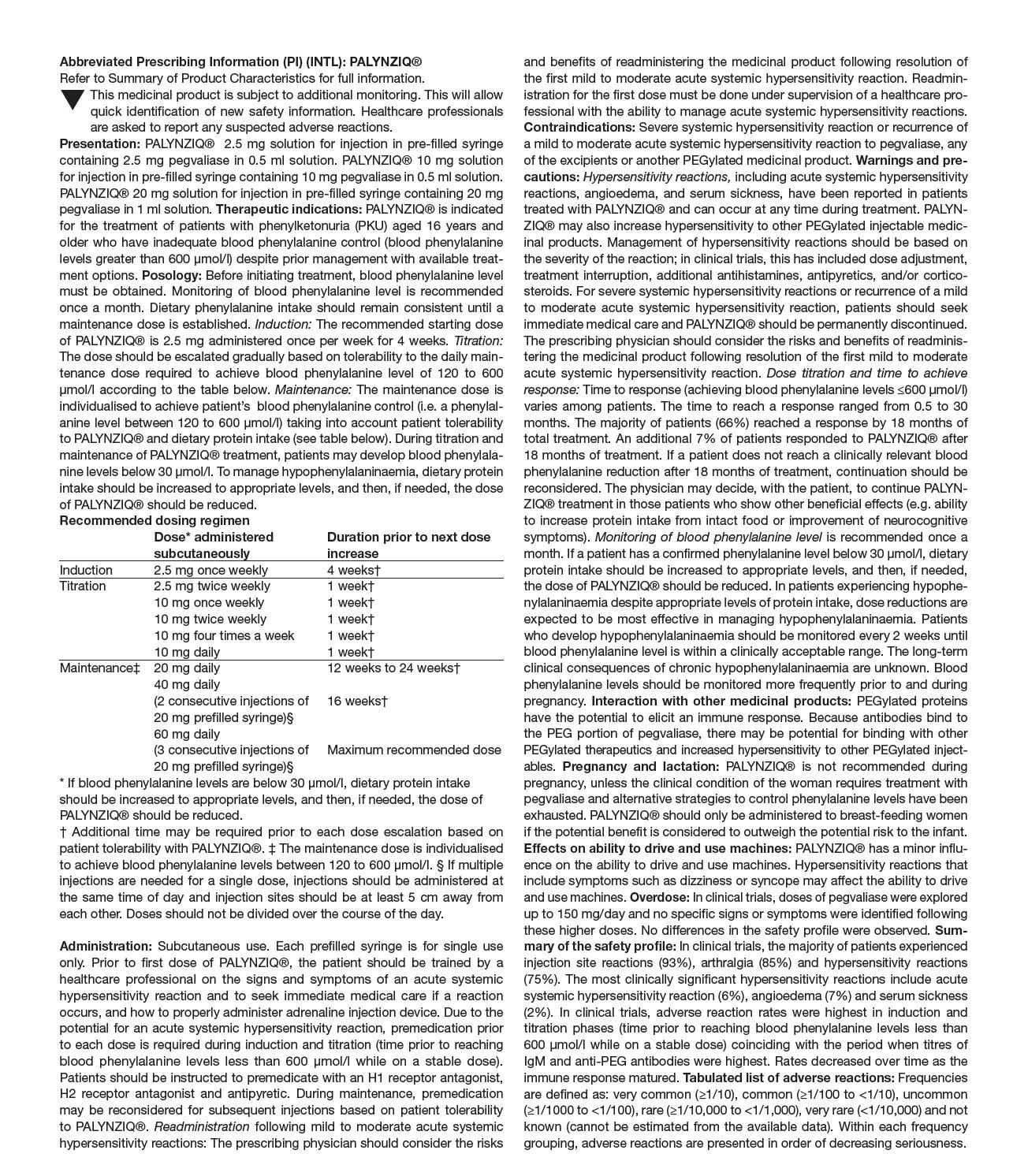
Pegvaliase is the first enzyme substitution therapy and only the second pharmacotherapy to be introduced for PKU. In Europe it is indicated at doses of up to 60mg/ day for patients with PKU aged 16 years and older who have inadequate blood phenylalanine control (blood phenylalanine levels >600μmol/L), despite prior management with available treatment options.5,20
Pegvaliase is a pegylated form of the recombinant enzyme, phenylalanine ammonia lyase (PAL) from Anabaena variablis.3,21 PAL converts phenylalanine to ammonia and trans-cinnamic acid, both of which are metabolised in the liver. Pegylation reduces the immunogenicity of PAL and prolongs its half-life.5,20 By contrast with PAH, which requires tetrahydrobiopterin as a cofactor and which acts intracellularly (primarily in hepatic cells), PAL acts in the blood compartment and is independent of BH4.21
Pegvaliase is administered by subcutaneous injection. Because PAL is a bacterial protein, measures must be in place to minimise the risk of hypersensitivity reactions. Treatment is initiated at a dose of 2.5mg once weekly for 4 weeks then escalated gradually, depending on tolerability, to the daily maintenance dose required to achieve a blood phenylalanine level of 120–600μmol/L. The maintenance dose of 20–40mg/day should be reached within 21–33 weeks; this should not be increased to the maximum recommended dose of 60mg/day for at least a further 16 weeks.5
The risk of hypersensitivity reactions to pegvaliase must be managed with a risk mitigation strategy.22 The dose should be administered after premedication with an H1-receptor antagonist, an H2-receptor antagonist and an antipyretic (this may be reconsidered during maintenance therapy, depending on tolerability). Patients are trained in self-injection and to recognise and respond to the signs and symptoms of hypersensitivity; they must carry an adrenaline pen and know how to self-administer the injection. For the first 6 months of treatment, administration should be supervised by an appropriately trained person who should remain with the patient for 60 minutes; this may be reconsidered after 6 months.5
The PRISM clinical trial programme
The key evidence for the efficacy and safety of pegvaliase is provided by the randomised phase 3 trials PRISM-1 (NCT01819727) and PRISM-2 (NCT01889862).3,4
PRISM-1 was an open-label parallel group study designed to assess the induction, titration and maintenance regimens; PRISM-2 was a four-part study in which patients treated with pegvaliase in PRISM-1 were randomised in a double-blind discontinuation phase (20–40mg/ day),4 followed by an open-label phase to assess pharmacodynamics and pharmacokinetics, then an open-label extension phase (5–60mg/day) to assess long-term outcomes. (Figure 1 shows the design of the PRISM trials.)

Participants
The PRISM population comprised adults (≥18 years or ≥16 years before the protocol was changed in August 2014) with PKU in the United States. Eligibility criteria included a blood phenylalanine concentration of >600μmol/L for 6 months prior to enrolment and no previous exposure to pegvaliase. Previous adherence to a restricted diet was not necessary but participants had to be willing to maintain a constant protein intake during the trial. Treatment with sapropterin must have been discontinued at least 14 days before the first dose of pegvaliase and LNAAs at least 2 days beforehand. The dose of medication for neuropsychiatric disorders must have been stable for at least 8 weeks prior to enrolment. Women or partners who were pregnant or planning a family were excluded.3
The study population had a mean age of approximately 29 and was predominantly of white ethnicity (Table 1). The mean blood phenylalanine level was approximately 1200μmol/L, far above the recommended range. The numbers of participants recruited to and withdrawing from PRISM-1 and PRISM-2 are summarised in Figure 2.


Treatment
Participants were randomised to achieve a maintenance dose of 20 or 40mg/day, using a gradual titration schedule. Those who could not reach or maintain these doses were enrolled directly into Part 4 of PRISM-2 (where the maintenance dose could be adjusted [5–60mg] according to individual efficacy and tolerability). The mean time required for titration to a dose of 20mg/day was 11.5 weeks and 14.0 weeks for 40mg/day; 95% of participants reached their target dose in 18.1 and 23.9 weeks, respectively.3
Those who reached the maintenance dose in PRISM-1 entered PRISM-2 (Part 1) taking that dose. In the double blind phase (Part 2), they were randomised to continue treatment or switch to placebo. In Part 3, all participants received the dose of pegvaliase to which they were originally assigned (so that those who had switched to placebo recommenced treatment with pegvaliase).
In Part 4, the dose of pegvaliase was increased to 40mg/day, unless it was not tolerated; participants who had received ≥52 weeks treatment with pegvaliase, including ≥8 weeks at a dose of 40mg/day, could, at the discretion of investigators, increase their dose to 60mg/day. The treatment protocol included measures to reduce the risk of hypersensitivity reactions, as per the prescribing information.3
Participants adjusted their protein intake towards the recommended daily allowance and maintained it within 10% of baseline; they also took a supplement of tyrosine (500mg) three times per day.
Efficacy endpoints
Endpoints included changes in blood phenylalanine levels, achievement of threshold levels (≤600μmol/L, ≤360μmol/L and ≤120μmol/L) and neuropsychological assessments (ADHD RS-IV, ADHD RS-IV IA, and the POMS scale – see Table 1 for details). Symptoms of mood (confusion, fatigue, depression, tension-anxiety, vigour, and anger domains) were evaluated using the Profile of Mood States (POMS) tool that has been modified to be specific to PKU (PKU-POMS). The PKU-POMS confusion subscale (ranging from 0 to 12 points with higher scores indicating greater degree of impairment) was considered most sensitive to changes in blood phenylalanine levels.
Safety endpoints included adverse events and immunogenicity. The primary intention-to-treat population for these analyses comprised all participants who initiated pegvaliase treatment in PRISM-1.3
Results
Outcomes for the PRISM trials have been reported collectively.3 The mean duration of treatment was 18.5 months; of those assigned to treatment, treatment duration was at least 12 months in 72.0% of patients and at least 24 months in 32.6% (at the time of reporting, 65% of patients were still receiving treatment). Adherence to treatment was at least 80% in 194 patients (74%). The most recent dose was 40–60mg/day in 46% of patients.
Mean (SD) blood phenylalanine concentration at baseline was 1232.7μmol/L (386.36). After 12 months, this had decreased by 51% to 564.5μmol/L (531.2) (n=164) and, after 24 months, the mean concentration had decreased to 311.4μmol/L (426.6) (a total reduction of 68.7%) (n=51) (Figure 3). A ≥20% reduction in blood phenylalanine is an early signal of the effect of pegvaliase. Kaplan–Meier analysis estimated that 71.8% (95% CI: 66.2%, 77.2%) of participants achieved this level by 12 months and 78.3% (95% CI: 73.0%, 83.3%) had done so by 24 months. A reduction in blood phenylananine concentration to the target recommended by management guidelines (≤360μmol/L) was achieved by 44.0% (95% CI: 38.2%, 50.4%) of participants by 12 months and 60.7% (95% CI: 54.4%, 67.1%) by 24 months. A stricter target of ≤120μmol/L was achieved by 51.2% (95% CI, 44.8%, 58.0%) by 24 months (Figure 4).


The reduction in blood phenylalanine levels was achieved despite an increase in phenylalanine/protein intake. Participants reported an increase in total protein intake from approximately 65g/day at baseline to 72g/day at 12 months and 77g/day at 24 months; an increase in mean phenylalanine intake from 1700mg/ day to 2123mg/day and 2680mg/day respectively.
ADHD RS-IV IA scores decreased with the blood level of phenylalaninine, indicating an improvement in inattention. The greatest improvement occurred in patients with scores indicating inattention at baseline (>9.0) and in those with the greatest reduction in blood phenylalanine (Figure 5). There was also a trend for mean (SD) POMS-PKU scores to improve in parallel with the reduction in blood phenylalanine, decreasing from 15.9 (13.3) at baseline (n=170) to 8.5 (12.5) at 12 months (n=181) and 6.6 (12.6) at 24 months (n=90). There was also improvement in the PKU-POMS confusion subscale from 4.0 (2.7) at baseline (n=170) to 2.4 (2.1) at 12 months (n=181) and 2.0 (2.2) at 24 months (n=90). However, these changes were not statistically significant.

Safety
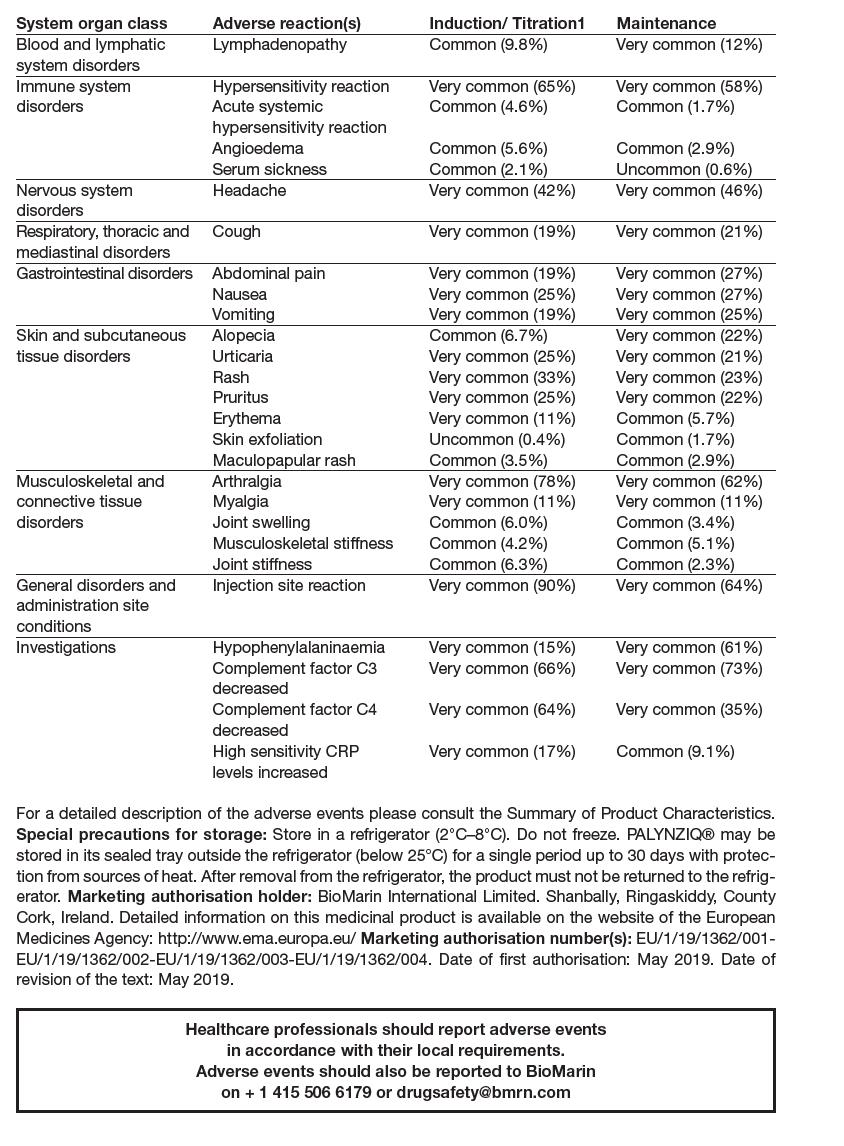
All participants in the PRISM trials reported at least one treatment-related adverse event.3 Almost all (99%) were mild to moderate in severity and 96% resolved without adjusting the dose or stopping treatment. Adverse events were more frequent in the first 6 months of treatment compared with subsequent treatment (event rate 58.6 per person-year versus 19.4 per person-year after 6 months) (Table 2).

The most frequently reported adverse events were arthralgia (70.5% of patients), injection site reactions (62.1%), erythema (47.9%) and headache (47.1%). The exposure-adjusted event rates were 2.6, 4.3, 1.7 and 1.6 per person-year of treatment, respectively.
The adverse events most often leading to treatment discontinuation were anaphylactic reaction (2.7%), arthralgia (2.7%), injection site reaction (1.1%) and generalised rash (0.8%). There were 61 serious adverse events in 47 participants (0.15 per person-year), of which 34 were treatment-related and included anaphylactic reaction (0.02 per person-year) and hypersensitivity (0.01 per person-year).
Twelve participants experienced 17 confirmed acute systemic hypersensitivity events. Of these, five were self-limiting (and received no treatment or dose change) and two were severe; adrenaline was administered in six cases. Six of these patients discontinued treatment. These events occurred after the first 50 days of treatment, but within 2 minutes of injecting pegvaliase; all were of short duration and there were no sequelae. No patient was positive for drug-specific IgE at the time. The protocol was amended in 2014 to include additional safety measures and no severe hypersensitivity events were subsequently reported during early treatment. No events suggested immune complex-mediated end-organ damage.
Patients developed IgG and IgM antibodies against polyethylene glycol (PEG) and PAL, and neutralising antibodies, which peaked after 3 months’ treatment and then remained at stable levels. Mean complement C3 and C4 levels initially decreased then returned to near baseline. Figure 6 suggests that tolerance develops to pegvaliase. The incidence of hypersensitivity reactions was greatest during the first 6 months of treatment when PEG IgM and IgG and PAL IgM antibodies were rising and complement C3 and C4 levels were falling. After 6 months, PAL antibody titres were stable but PEG antibodies decreased and C3/C4 levels increased. However, there was no statistical correlation between any antibody level and a hypersensitivity event.

Conclusions
The management of PKU has relied on dietary manipulation to lower blood phenylalanine levels, with the option of adjunctive pharmacotherapy for some patients. A protein-restricted diet is onerous and long-term adherence is low. Consequently, control of blood phenylalanine levels is poor, especially in adolescents and adults, increasing the risk of long-term complications that include effects on behaviour and cognitive function.
Pegvaliase is an innovative treatment for people with PKU aged over 16 years. In the PRISM trial, the mean blood phenylalanine concentration was significantly reduced within the first 3 months and sustained for up to 2 years of follow up in clinical trials. Pegvaliase treatment lowers blood phenylalanine levels by ≥20% in 78% of patients and to within the recommended target range (≤600μmol/L) in over half of patients after 12 months and in 68% of patients after 24 months. The PRISM studies showed that treatment with pegvaliase is associated with improvements in measures of neuropsychiatric function, notably inattention, consistent with the reduction in blood phenylalanine levels.
Treatment with pegvaliase requires supervision by a physician experienced in the management of PKU. The frequency of hypersensitivity reactions decreases after the first 6 months of treatment and mitigating measures effectively reduce the risk of serious events. Most adverse events are mild to moderate and 96% do not require an adjustment in treatment dose or discontinuation.
References
- Blau N, van Spronsen FJ, Levy HL. Phenylketonuria. Lancet 2010;376:1417–27.
- van Wegberg AMJ, MacDonald A, Ahring K, et al. The complete European guidelines on phenylketonuria: diagnosis and treatment. Orphanet J Rare Dis 2017;12:162.
- Thomas J, Levy H, Amato S, et al; PRISM investigators. Pegvaliase for the treatment of phenylketonuria: results of a long-term phase 3 clinical trial program (PRISM). Mol Genet Metab 2018;124:27–38.
- Harding CO, Amato RS, Stuy M, et al; PRISM-2 investigators. Pegvaliase for the treatment of phenylketonuria: a pivotal, double-blind randomized discontinuation phase 3 clinical trial. Mol Genet Metab 2018;124:20–6.
- Palynziq. Summary of Product Characteristics (https://www.ema.europa.eu/en/documents/product-information/palynziq-epar-product-information_en.pdf; accessed 26 November 2019).
- Vieira Neto E, Laranjeira F, Quelhas D, et al. Genotype-phenotype correlations and BH4 estimated responsiveness in patients with phenylketonuria from Rio de Janeiro, Southeast Brazil. Mol Genet Genomic Med 2019;7:e710.
- Blau N. Genetics of phenylketonuria: then and now. Hum Mutat 2016;37:508–15.
- El-Metwally A, Yousef Al-Ahaidib L, Ayman Sunqurah A, et al. The prevalence of phenylketonuria in Arab Countries, Turkey, and Iran: a systematic review. Biomed Res Int 2018 Apr 18;2018:7697210.
- Loeber JG. Neonatal screening in Europe; the situation in 2004. J Inherit Metab Dis 2007;30:430–8.
- Hardelid P, Cortina-Borja M, Munro A, et al. The birth prevalence of PKU in populations of European, South Asian and sub-Saharan African ancestry living in South East England. Ann Hum Genet 2008;72:65–71.
- Bilder DA, Noel JK, Baker ER, et al. Systematic review and meta-analysis of neuropsychiatric symptoms and executive functioning in adults with phenylketonuria. Dev Neuropsychol 2016;41:245–60.
- Trefz KF, Muntau AC, Kohlscheen KM, et al. Clinical burden of illness in patients with phenylketonuria (PKU) and associated comorbidities – a retrospective study of German health insurance claims data. Orphanet J Rare Dis 2019;14:181.
- Ford S, O’Driscoll M, MacDonald A. Living with phenylketonuria: lessons from the PKU community. Mol Genet Metab Rep 2018;17:57–63.
- Public Health England. NHS newborn blood spot screening programme. Updated 2017 (https://assets.publishing.service.gov.uk/government/uploads/system/uploads/attachment_data/file/642333/IMD_laboratory_handbook_2017.pdf; accessed 19 September 2019).
- García MI, Araya G, Coo S, et al. Treatment adherence during childhood in individuals with phenylketonuria: early signs of treatment Mol Genet Metab Rep 2017;11:54–8.
- Trefz FK, van Spronsen FJ, MacDonald A, et al. Management of adult patients with phenylketonuria: survey results from 24 countries. Eur J Pediatr 2015;174:119–27.
- Bosch AM, Burlina A, Cunningham A, et al. Assessment of the impact of phenylketonuria and its treatment on quality of life of patients and parents from seven European countries. Orphanet J Rare Dis 2015;10:80.
- Muntau AC, Adams DJ, Bélanger-Quintana A, et al. International best practice for the evaluation of responsiveness to sapropterin dihydrochloride in patients with phenylketonuria. Mol Genet Metab 2019;127:1–11.
- van Spronsen FJ, Muntau AC, Lagler FB, et al. Seventh interim analysis of the Kuvan® Adult Maternal Pediatric Registry (KAMPER): interim results in phenylketonuria patients. (ICIEM 2017 Abstracts.) J Inborn Errors Metab Screen 2017;5:134.
- European Medicines Agency. Palynziq (https://www.ema.europa.eu/en/medicines/human/EPAR/palynziq; accessed 19 September 2019).
- Bell SM, Wendt DJ, Zhang Y, et al. Formulation and PEGylation optimization of the therapeutic PEGylated phenylalanine ammonia lyase for the treatment of phenylketonuria. PLoS One 2017 Mar 10;12:e0173269.
- Hausmann O, Daha M, Longo N, et al. Pegvaliase: immunological profile and recommendations for the clinical management of hypersensitivity reactions in patients with phenylketonuria treated with this enzyme substitution therapy. Mol Genet Metab 2019, doi: 10.1016/j.ymgme.2019.05.006 [Epub ahead of print].
Prescribing Information